
How fast can emergency sanitation be delivered in Whittier?
Fast is the whole point of emergency porta potty rental. When a water main breaks or a building is red-tagged, people can't wait a week for a normal delivery window. Whittier Porta Pros treats disaster calls as a priority queue, not a next-Tuesday appointment. A standard delivery truck still needs the same footprint as any job: roughly 60 feet of straight clearance behind the vehicle, which matters when a disaster site is full of downed branches, collapsed fencing or emergency vehicles already parked close in. Crews scout that clearance before rolling, so the driver isn't guessing on arrival. For a household or small business dealing with a burst pipe or storm damage, a standard porta potty rental covers the basics: a 60 to 70 gallon holding tank, no water hookup needed, ready to use within minutes of being set. Larger incidents, shelters, or multi-family buildings usually need more than one unit, and the same how many porta potties do I need math used for construction crews applies here too, scaled to displaced residents instead of workers. Santa Fe Springs sits 4.8 miles southwest of Whittier and Pico Rivera is 5.5 miles west, both close enough that a second truck can reach a Whittier disaster site inside the same service window if the first order gets bigger once crews assess the damage.
What sanitation is available for shelters and displaced residents?
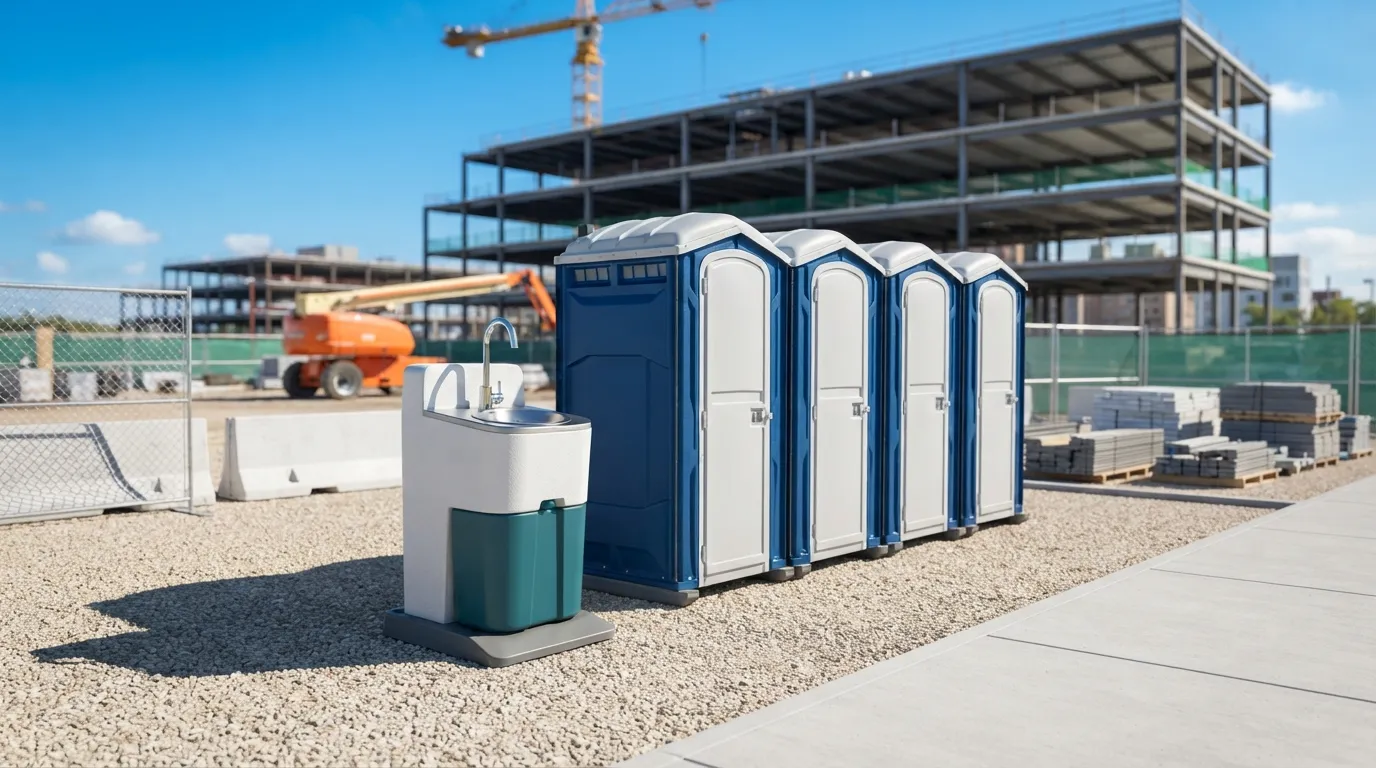
Shelters need more than a toilet in a box. They need water, handwashing and a way to keep occupants dry and functioning while normal utilities are down. Whittier Porta Pros builds disaster packages around three pieces: standard restrooms, portable sink rental or handwashing stations, and holding tanks for locations where the sewer connection itself failed. OSHA 1926.51(a)(1) requires an adequate supply of potable water at any place of employment, and while a shelter isn't a construction site, the same logic drives every setup: people need clean water on hand, not a walk to find it. Handwashing units get stocked the way 29 CFR 1910.141(d)(2) describes, with soap and towels or a hand-drying device, because sanitizer alone doesn't meet that standard and it won't stop the spread of illness in a crowded shelter either. For households with a septic system knocked offline by flooding or ground shift, septic pumping service can empty a compromised tank before it backs up into the house, and if there's any doubt whether the tank itself cracked, septic tank warning signs is worth a look before anyone flushes again. A holding tank rental buys time for a property that lost sewer service entirely, whether that's from a broken lateral line or a treatment plant outage.
Accessibility doesn't get skipped just because it's an emergency. ADA Standards section 213.2 still applies where units are clustered: at least 5 percent, and never fewer than one, must be accessible, so an ADA accessible porta potty belongs in every shelter order, not as an afterthought once someone in a wheelchair shows up needing one.
Can disaster sanitation handle a large-scale event like a wildfire evacuation?
Yes, and it scales the way any large deployment does: more units, more service visits, more trucks staged closer to the site. A wildfire evacuation or major flood response in Whittier can mean dozens of units spread across a shelter, a staging area and a distribution point, and that's a different order of planning than a single backyard rental. Construction site services already covers the toilet-count math under OSHA 1926.51(c), which sets 1 toilet for 20 workers or fewer and scales up from there, and disaster response crews often size shelter restrooms the same way, treating displaced residents like a workforce that needs coverage around the clock. ANSI/PSAI Z4.3 sets the baseline service interval at once a week for up to 10 users over a 40 hour week, but a disaster deployment runs on a tighter schedule than that baseline, with service trucks cycling through as often as the situation demands. Roll-off dumpsters help too, once debris cleanup starts: a 10 yard dumpster rental or 20 yard dumpster rental clears storm debris and damaged material fast, and temporary fence rental can secure a damaged structure or keep foot traffic out of a hazard zone while repairs happen. La Mirada is 5.5 miles south of Whittier, close enough that additional trucks and units can reach a Whittier emergency without a long haul across the county.
How quickly can units arrive after a disaster is declared?
Whittier Porta Pros prioritizes disaster and emergency calls ahead of routine scheduling, often getting units on site the same day depending on road access and how many trucks are already staged nearby. Call as soon as the need is known; earlier notice means more units available.
Do disaster sanitation units need a water or sewer hookup?
No. Standard units carry their own 60 to 70 gallon holding tank and need no hookup at all, which is exactly why they work during outages. Holding tank rental covers larger volume needs for shelters or multi-building sites.
What does emergency sanitation cost during a disaster?
Standard units run $100 to $350 a day depending on quantity and urgency; see porta potty rental cost for full detail. Multi-day disaster response often shifts to weekly pricing once the timeline extends past a few days.
Are accessible units available for shelter deployments?
Yes. ADA Standards section 213.2 requires at least one accessible unit in any cluster, and Whittier Porta Pros stocks them for exactly this situation. Check ADA restroom requirements for the fuller standard.
Can a damaged septic system be pumped during an emergency?
Yes, if the tank itself is intact. Septic pumping service handles emergency calls, and emergency septic service is built specifically for this kind of failure, whether from flooding, ground movement or a blocked line.
Next step
Get a delivery date
Tell us the address, the dates and the headcount. We size the order and confirm the route.